
da extensionzz — hair extensions for men & women BOOK APPOINTMENT
HomeHair ExtensionsGuide
Hair Extension Guide

Everything about hair extensions, in plain terms

Hair extension methods explained — tape, keratin, clip-in, weft and rings — with what each costs in Chennai, the installation methods, how long it lasts, and a maintenance guide for living with it. Written for anyone asking which type of hair extension is best for their hair, by the team that fits them, and kept honest: several of these guides tell you when extensions are the wrong answer. If you are ready to book rather than read, the hair extensions service page and the price list are where to go. For the hair itself — Remy, virgin, raw Indian — the human hair page is the guide to the grades.
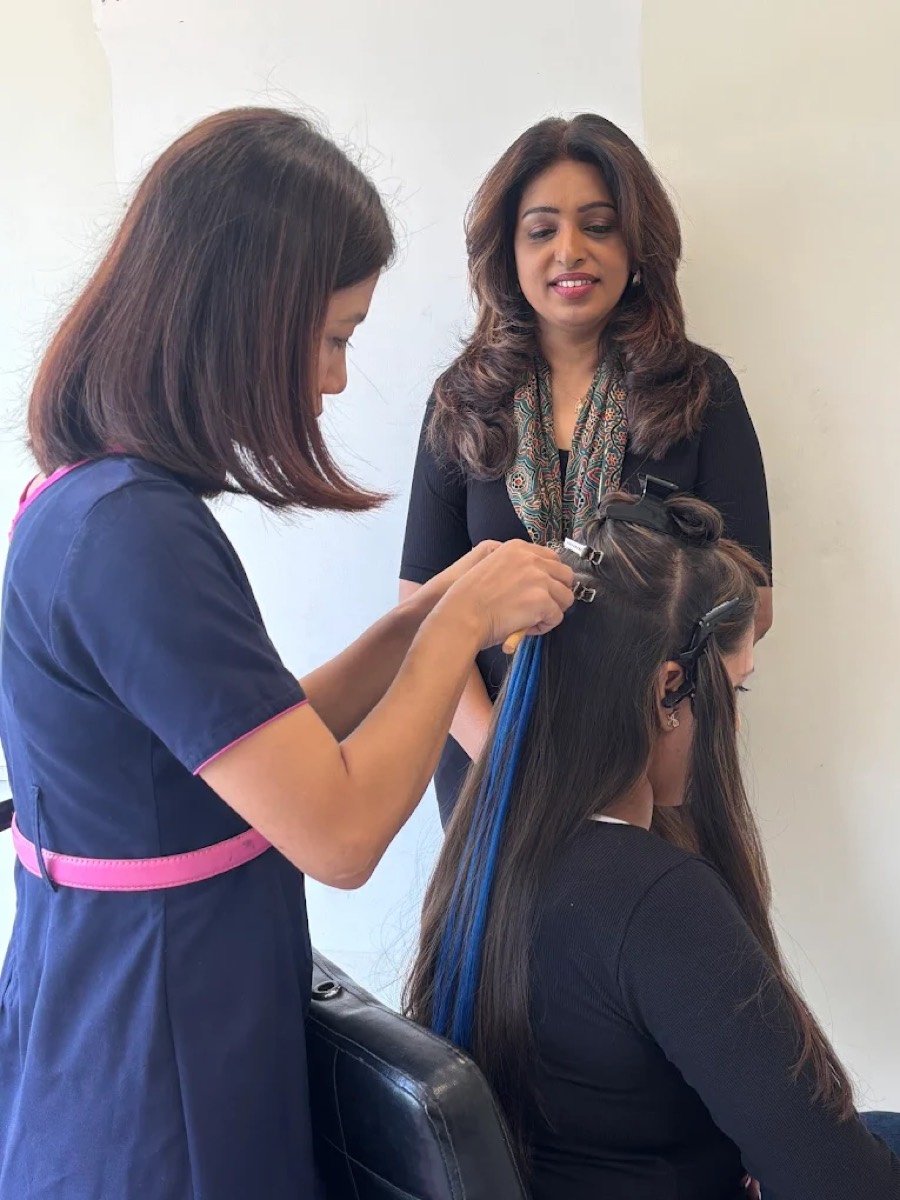
A stylist fitting hair extensions for a seated client at the DA Extensionzz studio in Chennai

Types and methods

The service pages for each method — what it is, who it suits, and what it costs from. Start here if you are choosing; the guides below go deeper on each question.

Tape-in extensions
Flat, lightweight panels — the quickest semi-permanent fitting.
SEE THE SERVICE →
Keratin / fusion extensions
Strand-by-strand keratin bonds — the longest interval between visits.
SEE THE SERVICE →
Clip-in extensions
Wefts you clip in yourself for the day — nothing bonded.
SEE THE SERVICE →
Weft / sew-in extensions
Rows of continuous hair — the most thickness per fitting.
SEE THE SERVICE →
Micro and nano ring extensions
Tiny rings, no glue or heat — the lightest strand method for fine hair.
SEE THE SERVICE →
Permanent extensions
Which long-wear method suits you, and what living with it is like.
SEE THE SERVICE →
Human hair extensions
Remy, raw and non-Remy — why the hair matters more than the method.
SEE THE SERVICE →
Extensions for thin and fine hair
Which methods fine hair can carry, and which we refuse to fit.
SEE THE SERVICE →
Bridal extensions
Trial, fitting and removal planned around the wedding.
SEE THE SERVICE →
Price list
Starting prices by method, plus maintenance, removal and refit.
SEE THE SERVICE →

Cost

What extensions cost in Chennai, what moves the number, and what to ask before comparing quotes.

How Much Do Hair Extensions Cost? A Stylist’s Price Guide
Hair extensions in Chennai run from about ₹6,000 for clip-ins to ₹40,000+ for a full head of premium bonded hair. What decides where you land, and what to ask before comparing quotes.
READ THE GUIDE →

Methods and comparisons

How each method works, how long it lasts, and the head-to-head comparisons.

Clip-In vs Permanent Hair Extensions
Clip-ins cost from ₹6,000, come out nightly and last years. Permanent methods cost from ₹10,000, stay in for weeks and need maintenance. Which one fits your life, not just your hair.
READ THE GUIDE →
How Long Do Hair Extensions Last? Complete Guide
How long each hair extension method lasts — tape 6–8 weeks, keratin 3–5 months, clip-ins for years — and what shortens or extends the life of the hair itself.
READ THE GUIDE →
Nano Ring vs Micro Ring Hair Extensions
Nano rings are about a third the size of micro rings and suit fine hair; micro rings suit medium hair and fit faster. Same mechanism, different size — here is how to choose.
READ THE GUIDE →
Tape-In vs Nano Ring Hair Extensions: Which Is Better?
Tape is faster to fit and lies flattest; nano rings use no adhesive, last longer between visits, and suit fine and oily hair. How to choose between them, with Chennai-specific factors.
READ THE GUIDE →

Choosing for your hair type

Which method suits which hair — fine, short, thinning, or wanting volume.

Best Hair Extensions for Thin Hair: Which Method Is Right?
For thin or fine hair, nano rings and lightly spaced tape are the methods that add volume without loading the roots. Why weight matters more than method, and when a topper is the better answer.
READ THE GUIDE →
Do Hair Extensions Damage Hair? What You Need to Know
Hair extensions do not damage healthy hair when the weight is right and maintenance is kept. Here is where damage actually comes from, which methods are gentlest, and when to say no.
READ THE GUIDE →
Hair Extensions for Fine Hair: What You Should Know
Fine hair is not thin hair — it is a narrower strand, and it changes what extensions can safely carry. Weight limits, the methods that suit it, and how to tell fine from shedding.
READ THE GUIDE →
Best Hair Extensions for Short Hair
Short hair can take extensions from about 7–10 cm. Tape lies flattest, nano rings hide best, and the blend is done with layers, not length. What works, what shows, and the honest minimum.
READ THE GUIDE →
Best Hair Extensions for Adding Volume
For volume without length, match the extension to your own length and add weight where it is missing. Weft for thick hair, tape or nano rings for fine, and a topper for the crown.
READ THE GUIDE →
Human Hair vs Synthetic Hair Extensions: Which Is Better?
Human hair extensions can be heat-styled, coloured and refitted for months; synthetic cannot. Where synthetic still makes sense, and the non-Remy trap between the two.
READ THE GUIDE →
Which Hair Extensions Look the Most Natural?
Keratin fusion is the most undetectable method, nano rings the most discreet on fine hair, and tape the flattest. But the hair grade and the colour match matter more than the method.
READ THE GUIDE →

Care and maintenance

Washing, brushing, sleeping and maintenance, so the hair lasts as long as it should.

How Often Should Hair Extensions Be Moved Up?
Tape and weft every 6–8 weeks, micro and nano rings every 8–12, keratin refitted at 3–5 months. Why the interval exists, what happens if you stretch it, and what the visit costs.
READ THE GUIDE →
How to Brush Hair Extensions Without Causing Damage
Hold the hair above the attachment, start at the ends, work up in sections, twice a day, with a loop or soft paddle brush. The technique, the tools, and what to do with a knot at the root.
READ THE GUIDE →
How to Maintain Hair Extensions: Complete Care Guide
The daily, weekly and six-weekly routine that keeps Remy extensions good for a year — washing, brushing, sleeping, heat, oil, and the maintenance visit that most people skip.
READ THE GUIDE →
How to Remove Hair Extensions Safely
Tape and keratin need a solvent; rings need opening with the right tool; wefts need unpicking. Why pulling them out yourself is the most expensive saving you can make, and what removal costs.
READ THE GUIDE →
How to Sleep With Hair Extensions
Dry it fully, brush it out, tie a loose plait or low bun, and sleep on silk. Why overnight tangling is where extension damage starts, and what to do about clip-ins.
READ THE GUIDE →
How to Wash Hair Extensions Correctly
Wash two or three times a week, head upright, sulphate-free shampoo on the scalp only, conditioner from mid-length down, and dry the attachments fully. The step-by-step routine.
READ THE GUIDE →

Bridal

Planning extensions around a wedding, from the trial to the jadai.

Hair Extensions for Weddings: Bridal Guide
When to book, which method suits a multi-day wedding, how the trial works, and what to do about the jadai. A planning guide from a Chennai bridal extension studio.
READ THE GUIDE →
South Indian Bridal Hair Extensions: Complete Guide
The jadai needs length and weight your own hair may not have; the reception wants volume and movement. How extensions serve both, which hair suits the braid, and the Chennai timeline.
READ THE GUIDE →

Hair extension questions, answered

What are hair extensions?

Hair extensions are lengths of human hair — or, more cheaply, synthetic fibre — attached to your own hair to add length, volume or both. They are fixed with tape panels, keratin bonds, sewn wefts or small rings that stay in for weeks to months, or with clips that come out at night. We fit only human hair, matched to your colour and texture, so the added hair washes, styles and moves like your own.

What are the different types of hair extensions?

Five methods, in two families. Semi-permanent: tape-in, keratin fusion, weft (sew-in) and micro or nano ring, which stay in for weeks to months. Temporary: clip-ins, which come out at night. Each has a service page above; the choosing guides compare them for your hair.

Which type of hair extension is best?

The one your hair can carry. Fine or thin hair suits nano rings or sparse tape; medium hair suits tape or keratin; thick hair can take a weft row for the most volume. For a single occasion, clip-ins. Start with the thin-hair guide or the most-natural guide.

How are hair extensions installed?

Tape panels are pressed either side of a thin section of your hair; keratin tips are melted into a small bond; wefts are sewn to a track or beaded row; rings are clamped over a strand; clip-ins snap onto the roots. Every installation with us follows a free consultation and colour match, and takes between about an hour (tape, clip-in) and three to four hours (keratin).

How do I maintain hair extensions?

Wash with the attachments in mind, brush from the ends up, sleep with hair loosely tied, keep oil off the attachment points, and book a move-up every six to eight weeks for tape and rings. The care guides above cover each step, and the maintenance guide is the one to read first.