
How to Brush Hair Extensions Without Causing Damage
Brushing is the care step you do most often, which makes it the one that adds up. Done right it takes two minutes and keeps the hair smooth for months. Done the way most people brush their own hair — from the top down, without holding the roots — it pulls on the attachment points a few hundred times a day, and that is a slow way to loosen a fitting.
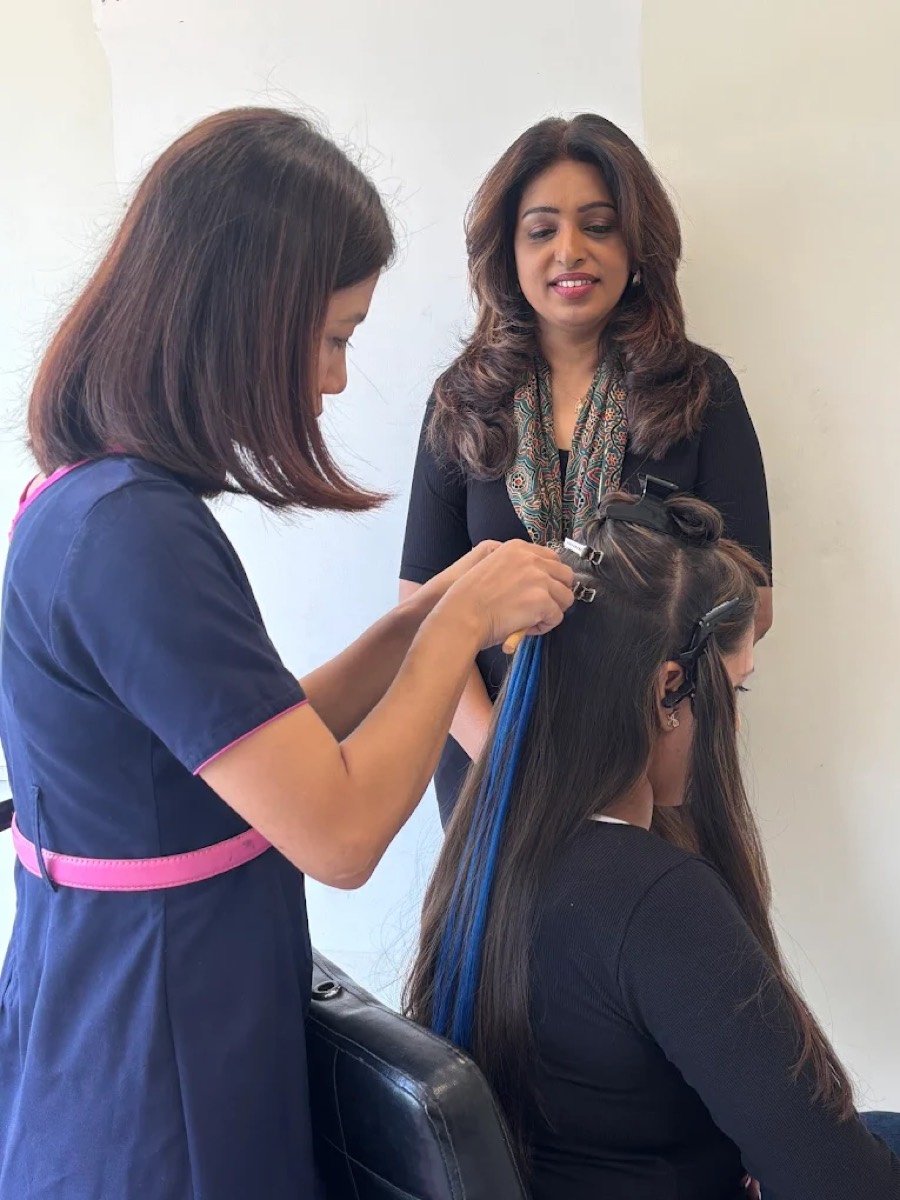
The technique
Hold above the attachments. This is the whole thing. Gather the section you are brushing and hold it firmly with your free hand a little above the attachment points, so that any tug from the brush is taken by your hand and not by the roots. Brushing without holding transfers every snag straight to the weakest point in the system.
Start at the ends. Brush the last few centimetres until they run clean, then move the brush up a little and repeat, working toward the roots. Starting at the top drags every tangle below it downward into one large knot.
Work in sections. Divide the hair into three or four sections and brush each fully before moving on. Trying to brush the whole head at once means the outer layer gets brushed and the underneath does not, and the underneath is where the attachments are.
Brush through the attachment points last, and gently. Once the lengths run clean, run the brush lightly over the attachment area from root to tip with the section still held. Do not scrub at the attachments; a loop brush glides over them.
Tools
Loop brush. The bristles are closed loops rather than pins, so they cannot catch on a ring, a tape edge or a keratin bond. This is the brush we recommend for every method and the one we hand out at the fitting.
Soft-bristle paddle brush. A good second choice for the lengths, with bristles soft enough to flex over an attachment rather than catch it.
Wide-tooth comb. For wet hair only, and only if you must. Widely spaced teeth pass over attachments; a fine comb hooks them.
Avoid: fine-tooth combs, brushes with balled pin tips (the balls catch under rings and tape edges), and anything with a metal core, which heats up under a dryer and can soften a bond.
Wet or dry?
Dry, whenever possible. Wet hair stretches and tangles far more easily, and a wet tangle at an attachment point becomes a knot. The right order is: brush thoroughly before washing so there is nothing to tangle, then squeeze dry and let the hair mostly air-dry before brushing again, gently, with a wide-tooth comb if it is still damp. Our washing guide has the sequence.
Dealing with a knot at the root
Do not pull it. Hold the section above the knot, apply a little leave-in conditioner or detangling spray to the knot itself, and work it loose from the bottom with your fingers, then with the ends of the brush. If a knot has formed around an attachment and will not clear, stop and come in; a knot that has tightened around a ring or a bond is a maintenance job, not a brushing one, and forcing it takes hair with it.
Knots at the roots that keep coming back are usually a sign that the attachments have grown out and are tangling with each other — see how often extensions need moving up.
How often
Morning and night, and before washing. The night brush matters most, because hair taken to bed with a tangle in it wakes up with a worse one. Two minutes each time. The full routine is in the complete care guide.
Frequently asked questions
A loop brush — the closed-loop bristles cannot catch on rings, tape edges or bonds. A soft-bristle paddle brush is a good second choice. Avoid fine-tooth combs and brushes with balled pin tips.
Twice a day, morning and night, and always before washing. The night brush matters most, because a tangle taken to bed gets worse overnight.
Only if you must, and only with a wide-tooth comb, gently, holding above the attachments. Wet hair stretches and tangles far more easily. Brush thoroughly before washing so there is little to tangle afterwards.
Hold the section firmly above the attachment points with your free hand, so the brush’s tug is taken by your hand and not the roots. Start at the ends and work up in small steps.
Usually the attachments have grown out and are tangling with each other, which means maintenance is due. It can also be sleeping with the hair loose, or brushing without holding the roots.
Stop before you pull. Come in to any of our three Chennai studios and we will free it without taking hair with it — and check whether the fitting is due for moving up.
See our hair extension servicesOr see the price list, including maintenance.